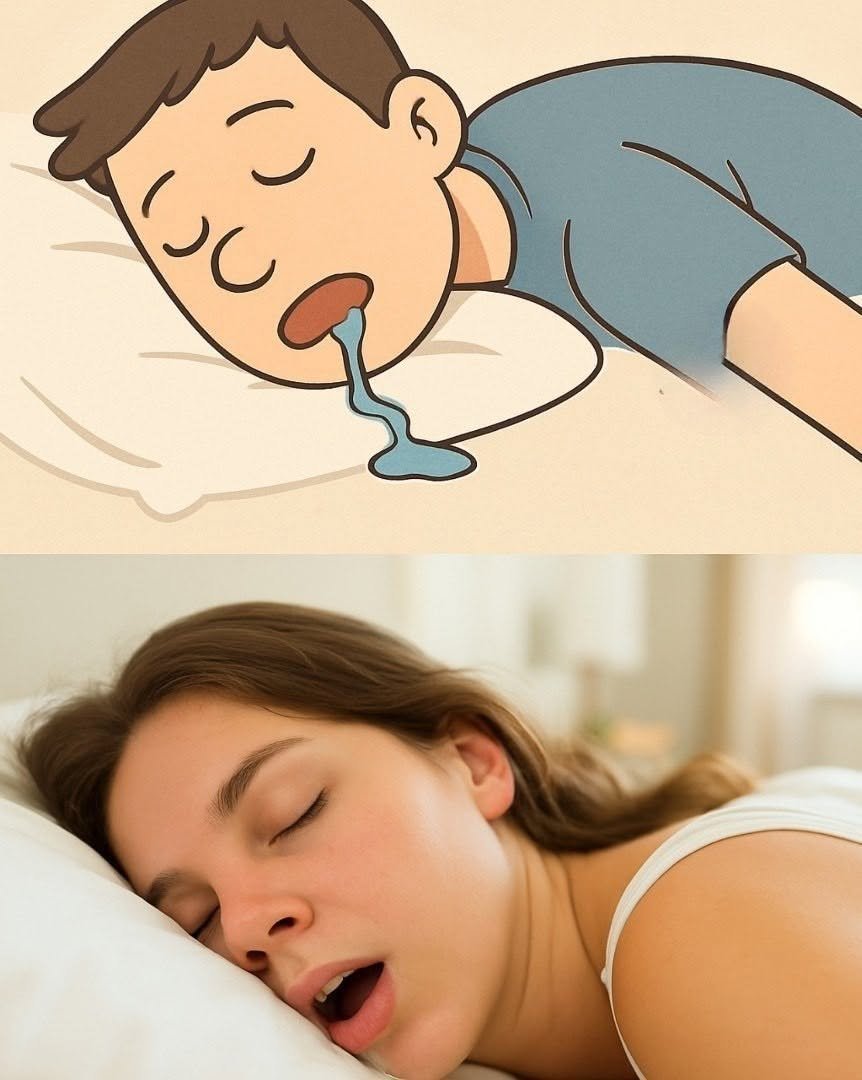
PART 2 — IF YOU DROOL IN YOUR SLEEP, YOUR BRAIN MAY NOT BE THE PROBLEM
For years, people have shared the claim that waking up with drool on your pillow means your brain is doing something unusual.
But the truth is much less frightening.
Drooling during sleep is usually related to something much simpler: saliva production, swallowing, and the position of your mouth while you’re asleep.
When you’re awake, you automatically swallow saliva.
When you’re sleeping, that swallowing happens less frequently.
If you’re sleeping on your side or stomach, or if your mouth falls open during the night, saliva can escape onto your pillow.
A blocked nose can make this even more likely because you may start breathing through your mouth.
Allergies, colds, sinus congestion, certain medications, acid reflux, and some sleep-related conditions can also contribute.
So if you occasionally wake up and discover a small wet spot on your pillow, don’t panic.
It doesn’t automatically mean there’s something wrong with your brain.
But there is one reason you shouldn’t completely ignore a sudden change.
If you have new or severe drooling, especially when it happens along with trouble swallowing, choking, weakness, facial changes, confusion, or difficulty speaking, seek medical attention promptly.
Those symptoms can indicate a more serious problem and deserve professional evaluation.
For ordinary nighttime drooling, simple changes may help.
Try sleeping with your head slightly elevated, treating nasal congestion, keeping your bedroom comfortable, and discussing persistent mouth-breathing or loud snoring with a healthcare professional.
And here’s something many people don’t realize:
Sometimes the real issue isn’t the drooling itself.
It’s why your mouth is staying open while you sleep.
So the next time you wake up with a wet pillow, don’t immediately believe a scary social-media headline.
Your body may simply be doing something completely ordinary while you’re asleep.
#SleepHealth #HealthyAging #HealthFacts #SleepTips #WellnessTips #BrainHealth #HealthyLiving #MedicalFacts #AgingWell #FacebookStories