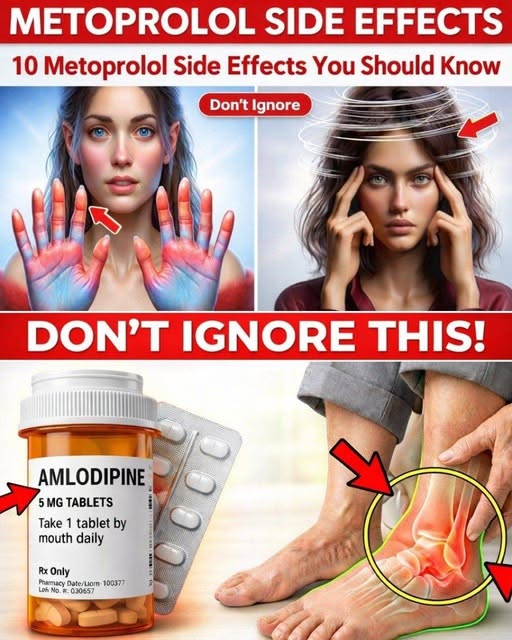
Metoprolol is a commonly prescribed medication used to treat high blood pressure, chest pain, irregular heart rhythms, and certain heart conditions. It belongs to a group of drugs called beta blockers, which work by slowing the heart rate and reducing the heart’s workload. Many people take it safely and benefit from it, but like all medications, it can cause side effects.
Headlines that imply doctors are “praying you don’t discover” side effects are misleading. Clinicians are expected to discuss benefits, risks, and monitoring needs. A better approach is knowing what to watch for and when to seek help.
1. Fatigue and Low Energy
One of the most common side effects is feeling tired or lacking energy. Because metoprolol slows the heart rate and lowers blood pressure, some people feel sluggish, especially when first starting treatment or after a dose increase.
2. Dizziness or Lightheadedness
Lower blood pressure can sometimes cause dizziness, especially when standing up quickly. This may improve as your body adjusts.
3. Slow Heart Rate
Metoprolol is designed to reduce heart rate, but sometimes it can slow it too much. Symptoms may include weakness, faintness, unusual fatigue, or feeling like your pulse is very low.
4. Cold Hands and Feet
Reduced circulation to the extremities can lead to cold fingers or toes in some people.
5. Shortness of Breath or Wheezing
Because beta blockers can affect airways in some individuals, breathing symptoms may occur, particularly in people with asthma or certain lung conditions.
6. Digestive Upset
Some users experience nausea, stomach discomfort, diarrhea, or constipation.
7. Sleep Changes
Vivid dreams, trouble sleeping, or sleep disturbances can occur in some people.
8. Mood Changes
A small number of people report low mood, reduced motivation, or depressive symptoms. Many other factors can also contribute, so discuss changes with a clinician.
9. Sexual Side Effects
Some people may notice reduced libido or erectile difficulties while taking beta blockers.
10. Blood Sugar Awareness Changes
In people with diabetes, metoprolol can sometimes mask symptoms of low blood sugar such as rapid heartbeat, making monitoring more important.
Important Warning: Do Not Stop Suddenly
Stopping Metoprolol abruptly can be dangerous and may worsen chest pain, trigger high blood pressure spikes, or increase cardiac risk. Any change should be supervised by a healthcare professional.
When to Seek Medical Help Promptly
Contact a doctor urgently or seek emergency care if you experience:
- Fainting
- Severe shortness of breath
- Chest pain
- Very slow pulse with symptoms
- Swelling of face or throat
- Severe allergic reaction
- Confusion or collapse
