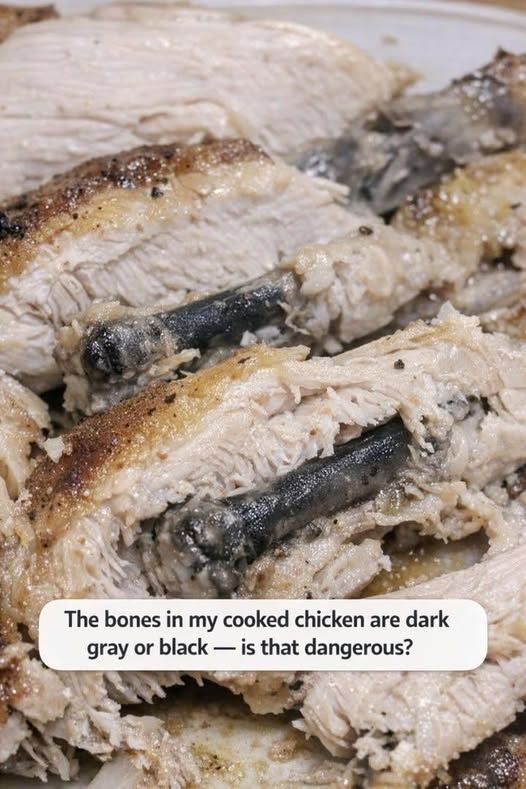
1. Young Chicken (Most Common Reason)
- Young chickens have thinner, less developed bones
- Pigments in bone marrow can darken during cooking
- This is often called “bone darkening” or “melanosis”
👉 Very common in supermarket chicken
2. Heat Penetration During Cooking
- High heat can change blood pigments in the bone marrow
- Especially in:
- roasting
- grilling
- air frying
👉 The bone darkens faster than the meat
3. Freezing & Storage Effects
- Frozen chicken can develop darker bone color after thawing and cooking
- Ice crystals affect tissues inside the bone
4. Slow or Pressure Cooking
- Long cooking breaks down marrow pigments
- Can make bones look:
- dark gray
- brown
- even black-ish inside
5. Natural Blood Pigments (Not Blood Spoilage)
- Myoglobin in marrow changes color with heat
- This is similar to why meat changes from red to brown
⚠️ When It Might Be a Problem
Dark bones alone are NOT dangerous — but check these signs:
❌ Bad smell (sour, rotten)
❌ Slimy texture
❌ Greenish or mold-like appearance
❌ Meat still raw near bones
❌ Strange bitter taste
👉 If any of these appear, discard the chicken.
🧠 Key Safety Truth
✔ Dark bones = usually normal reaction
✔ Not a sign of infection or poison
✔ Safe if chicken is fully cooked and fresh
💡 Simple Rule
If your chicken:
- smells normal
- tastes normal
- is fully cooked
👉 Then dark bones are 100% harmless in most cases