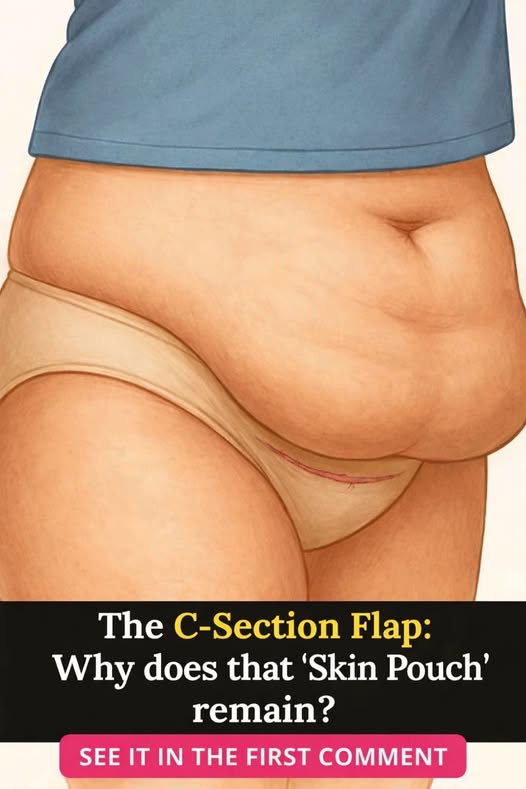
Many people notice a small pouch, shelf, or fold of skin and tissue around the lower abdomen after a Cesarean section (C-section). Online, it’s sometimes called the “C-section shelf” or “C-section flap.” While the wording can sound harsh, the reality is that this is a very common physical change after abdominal surgery and pregnancy.
It can happen even in people who are fit, active, or at lower body weights. It is not simply about “not losing the baby weight.”
Why It Happens
Several factors can contribute:
1. Scar Tissue and Healing
A C-section involves cutting through multiple tissue layers. As healing occurs, scar tissue forms. Scar tissue can tether deeper tissues, creating a fold or indentation above the scar line.
2. Skin Stretching During Pregnancy
Pregnancy stretches the skin and abdominal wall. Skin may not fully retract afterward, especially after multiple pregnancies or depending on genetics.
3. Changes in Fat Distribution
Hormonal shifts, sleep deprivation, stress, and postpartum recovery can influence where fat is stored.
4. Weakened Core / Separated Abdominals
Some people develop diastasis recti (abdominal separation), which can change abdominal contour and support.
5. Posture and Pelvic Changes
Pregnancy and recovery can alter posture, which may make the lower abdominal area more prominent.
Important Truth: It’s Not a Personal Failure
This area often persists because of anatomy, healing, and tissue changes—not lack of discipline. Exercise and healthy eating can help overall body composition and strength, but they cannot “spot reduce” scar-related folds.
What Can Help
1. Scar Massage (Once Healed and Cleared by Your Clinician)
Some people benefit from gentle scar mobilization guided by a professional.
2. Core Rehabilitation
A pelvic floor physical therapist or postpartum rehab specialist can help with:
- Deep core activation
- Breathing mechanics
- Diastasis management
- Posture
3. Progressive Strength Training
Building overall strength and improving body composition may reduce prominence.
4. Clothing Comfort
High-waisted or supportive clothing can improve comfort if the scar area feels sensitive.
5. Time
Healing and tissue remodeling can continue for many months.
When to Seek Medical Advice
Talk with a healthcare professional if you have:
- Pain at the scar
- Bulging that worsens with straining
- Numbness that concerns you
- Redness or swelling
- Drainage
- Suspected hernia
- Persistent pelvic floor symptoms
About Cosmetic Options
Some people pursue procedures like scar revision, abdominoplasty, or liposuction. These are personal choices and usually best discussed with qualified surgeons after full recovery.