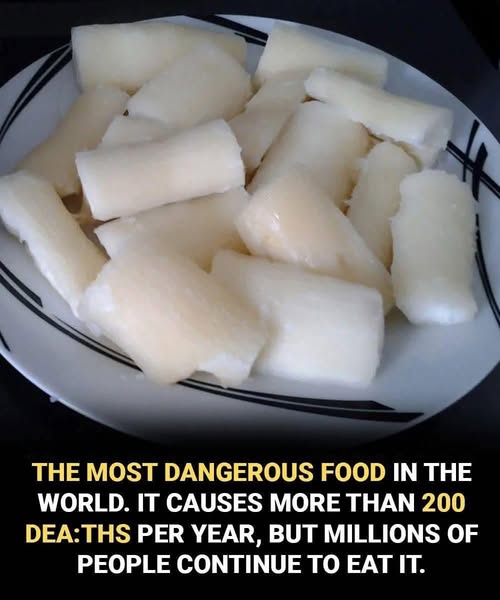
Cassava (also called yuca) is a starchy root vegetable widely eaten in many parts of the world. It’s delicious and versatile, but it must be prepared correctly, because raw cassava contains natural compounds that can be harmful if not properly removed through peeling and cooking.
Important Safety Warning
Cassava must never be eaten raw or undercooked. It contains compounds that can release cyanide when improperly handled. Proper peeling, soaking, and thorough cooking make it safe to eat.
Step 1: Choose the Right Cassava
- Pick firm, heavy roots
- Avoid soft, cracked, or moldy pieces
- Fresh cassava should feel solid, not rubbery
Step 2: Peel Properly
- Cut cassava into 2–3 inch sections
- Slice off both ends
- Remove the thick brown skin completely
- Also remove the thin pinkish layer underneath
Tip: Always peel before cooking—don’t try to cook with the skin on.
Step 3: Cut and Soak (Optional but Recommended)
- Cut into chunks or sticks
- Soak in water for 30 minutes to several hours
- This helps reduce bitterness and improves texture
Step 4: Boil Until Fully Soft
Place cassava pieces in a pot and cover with water.
- Bring to a boil
- Cook for 20–30 minutes or until very soft
- It should be fork-tender and easy to break
✔ If it’s still hard inside, keep cooking.
Step 5: Drain and Remove the Core (Important)
Some cassava has a tough woody fiber in the center.
- Remove it after boiling
- Discard any hard or stringy parts
Step 6: Cook or Serve
Once properly boiled, cassava is safe and ready to use. You can:
Simple Serving Ideas
- Add butter, salt, and pepper
- Mash like potatoes
- Fry for crispy cassava fries
- Use in soups and stews
- Bake or roast for extra flavor
Popular Cooking Methods
1. Boiled Cassava
Soft, mild, and served as a side dish.
2. Fried Cassava
Boiled first, then fried until golden and crispy.
3. Cassava in Stews
Adds thickness and hearty texture.
Storage Tips
- Raw cassava: store in a cool place and use quickly (it spoils fast)
- Cooked cassava: refrigerate up to 3 days
- Can also be frozen after boiling
