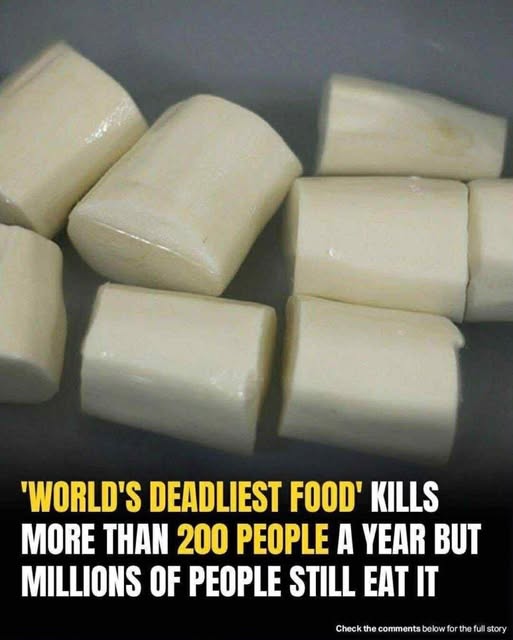
Every year, a surprising food labeled as the “world’s deadliest” is responsible for over 200 deaths globally. Yet, nearly 500 million people continue to consume it regularly. That food is cassava — a staple for millions, especially in parts of Africa, South America, and Asia.
What Is Cassava?
Cassava is a root vegetable, similar to a potato, and is widely used to make foods like:
- Tapioca
- Cassava flour
- Garri and fufu
It is a major source of carbohydrates and plays a critical role in feeding populations in developing regions.
Why Is Cassava Dangerous?
Cassava naturally contains cyanogenic compounds, which can release cyanide — a highly toxic substance — if the plant is not prepared correctly.
Improper processing (such as eating it raw or undercooked) can lead to:
- Cyanide poisoning
- Nausea and vomiting
- Paralysis (in severe cases)
- Even death
This is why it has gained the reputation of being one of the most dangerous foods in the world.
Why Do People Still Eat It?
Despite the risks, cassava remains widely consumed because:
- It is affordable and accessible
- It grows in harsh climates where other crops fail
- It provides a reliable calorie source
For many communities, cassava is not just food—it’s a necessity for survival.
How Is Cassava Made Safe?
The key to eating cassava safely lies in proper preparation. Traditional methods significantly reduce its toxicity:
- Peeling the root
- Soaking it for long periods
- Fermenting
- Thorough cooking
When processed correctly, cassava is safe and nutritious.
Important Health Warning
Cassava can be dangerous if:
- Eaten raw
- Not properly soaked or cooked
- Consumed in large amounts without proper preparation
People who rely heavily on cassava without proper nutrition may also face long-term health issues.
Final Thoughts
Cassava is a powerful example of how a food can be both life-sustaining and potentially harmful. While it feeds hundreds of millions, improper handling can make it deadly.
Understanding how to prepare it correctly is essential to enjoying its benefits safely.